Rewards Without Bribes: Encouraging Kids' Routines
By KindSteps / Hule Technology · Originally published 2026-09-14 on X
Practical non-material reward ideas and ways to help children take ownership of everyday routines.
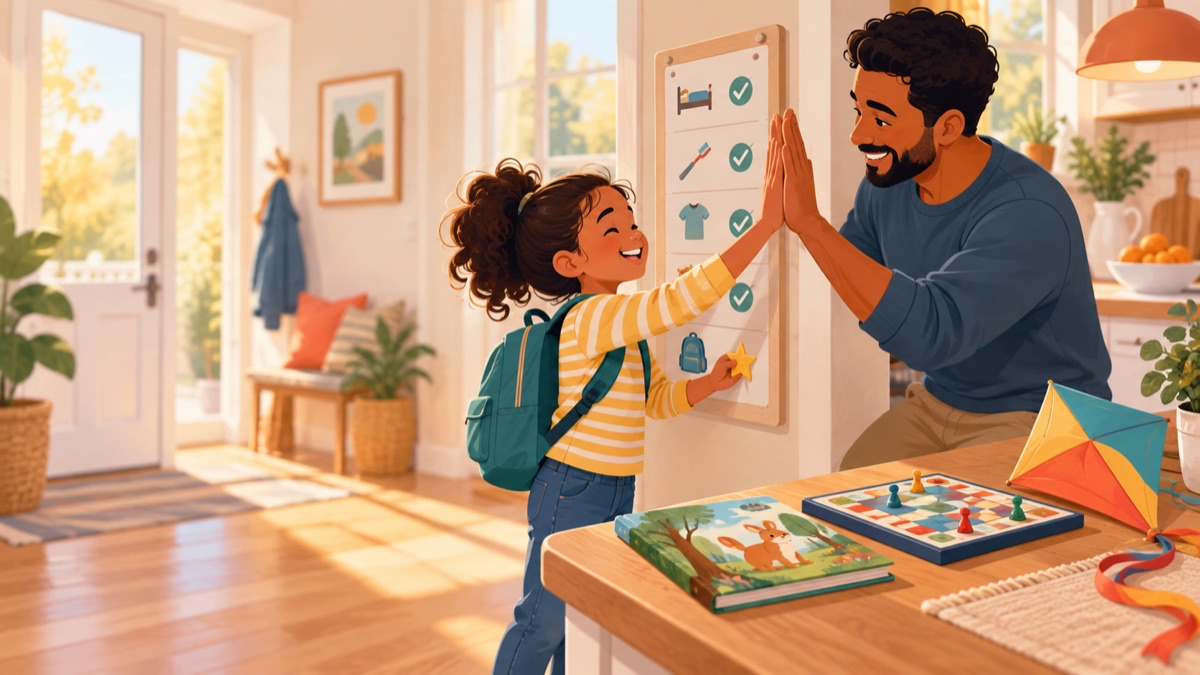
Many parents have the same worry: “If I reward my child for completing a routine, will they expect a prize every time?”
It is a fair question. A reward system can become exhausting when every small responsibility turns into a negotiation. But rewards themselves are not the problem. The design of the system matters.
The goal is not to pay children for ordinary family life. It is to make early progress visible, celebrate growing independence, and gradually help the routine stand on its own.
Start with the behavior you want to grow
“Be good” is difficult for a child to act on. “Put your school bag by the door” is clear.
Rewards work better when they are connected to small, observable actions. A child should be able to answer two questions without guessing: What do I do next? How will I know I finished?
For a school morning, the actions might be getting dressed, eating breakfast, brushing teeth, packing a bag, and putting on shoes and a jacket. The routine becomes manageable because the next step is visible.
Reward consistency, not perfection
A missed step does not mean the whole day failed. Children are learning a pattern, and patterns take repetition.
Instead of demanding a perfect streak, notice progress: fewer reminders, starting without being asked, returning to the checklist after getting distracted, or completing one previously difficult step independently.
The most useful reward system says, “You are getting better at this,” not, “You only succeeded if everything was perfect.”
Keep rewards connected to family life
Rewards do not need to be money or toys. In many families, the most motivating options are experiences that give a child choice, attention, or responsibility.
Good non-material rewards can include:
- Choosing the bedtime story
- Picking the family game
- Selecting music for dinner
- Planning a weekend activity
- Getting extra outdoor or creative time
These rewards feel meaningful because they create connection. They also avoid teaching that every responsibility has a cash price.
Let the child help choose
Parents still set the boundaries, but children can choose from a short menu of parent-approved rewards. That small amount of ownership changes the tone.
The system is no longer something being done to the child. It becomes a structure the family designed together.
This is also useful feedback. If a reward never motivates a child, it may simply be the wrong reward for that child. Siblings do not need identical routines or identical goals.
Gradually let the routine take over
A reward is scaffolding, not the destination.
Once a routine becomes familiar, make the reward less frequent or shift the focus toward a larger weekly goal. Keep the celebration, but allow confidence and competence to become part of the motivation.
The long-term win is the moment a child checks what comes next without waiting for another reminder.
How KindSteps supports this approach
KindSteps lets parents create age-appropriate tasks and a menu of family-approved rewards. Children see their own daily list, mark progress, and watch points add up. Parents can review weekly progress and activity history without forcing every child into the same routine.
Points make progress visible. Families decide what the points mean.
KindSteps is available on Android, and you can start free:
Try a seven-day experiment
Choose one difficult moment—not the entire day. Break it into three to five visible steps. Let your child choose one meaningful, parent-approved reward, and try the same structure for a week.
At the end of the week, ask: Did we need fewer reminders? Which step became easier? Does this reward still feel encouraging, or should we choose a different one?
The best routine system is not the one with the most points. It is the one the family needs less and less over time.
What non-material reward works surprisingly well in your family?
Originally shared as an X Article. This website edition uses a descriptive title and accessible web formatting.
Practical routine ideas from the KindSteps team. Examples are illustrative; every child may need a different level of support.
Download KindSteps for Android